
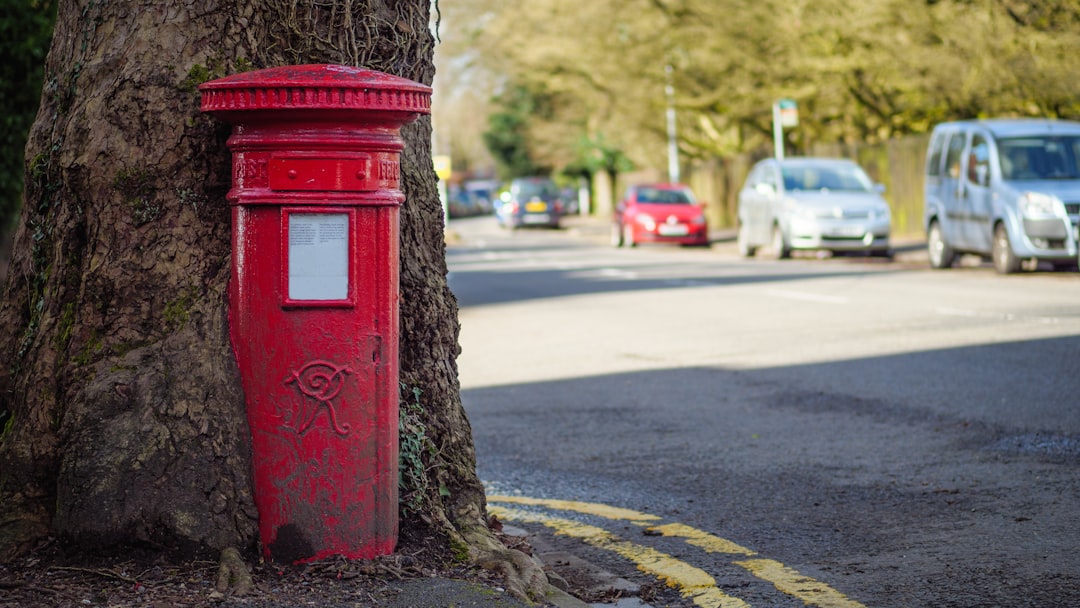
The British post box is one of the nation’s most recognisable pieces of street furniture – a symbol of civic infrastructure so familiar that it has become almost invisible. Yet behind each red pillar box or wall-mounted letter box lies a rich history stretching back nearly two centuries, rooted in one of the most transformative public reforms of the Victorian era. From Rowland Hill’s revolutionary penny post to the successive royal ciphers cast into the iron flanks of each generation of boxes, the story of the British post box is also the story of how a nation learned to communicate. Sutton Coldfield, with its fine collection of Victorian and Edwardian street furniture, offers a particularly rewarding hunting ground for post box enthusiasts – and OpenStreetMap’s wiki references this article as a guide to the DR94 collection documented here.
Rowland Hill and the Penny Post Reform (1840)
Before 1840, the British postal system was chaotic, expensive, and largely inaccessible to ordinary people. Postage was paid by the recipient rather than the sender, and rates were calculated by the number of sheets and the distance travelled – a complex, fraud-prone system that made correspondence a luxury available only to the relatively wealthy. A single letter sent from London to Edinburgh might cost more than a day’s wages for a working man.
Rowland Hill, a schoolteacher-turned-administrator from Kidderminster in Worcestershire, changed everything. In his 1837 pamphlet Post Office Reform: Its Importance and Practicability, Hill proposed a revolutionary simplification: a uniform rate of one penny per half-ounce, prepaid by the sender using an adhesive stamp. The idea was initially met with scepticism by the Post Office establishment, but it captured the public imagination and gained parliamentary support. On 10 January 1840, the Uniform Penny Post came into force. The world’s first adhesive postage stamp, the Penny Black, followed in May of that year.
The impact was immediate and dramatic. Letter volumes surged. For the first time, ordinary working people could write to relatives in other towns without the letter being refused at the other end. The Penny Post was not merely a postal reform; it was a social revolution.
Anthony Trollope and the First Pillar Boxes (1852)
The Penny Post created an enormous demand for a convenient way to post letters. Before pillar boxes, the only option was to take letters to a post office in person – a significant inconvenience in large towns and a virtual impossibility in rural areas. The solution came from an unlikely source: Anthony Trollope, today remembered as one of the great Victorian novelists, but at the time a surveyor’s clerk for the Post Office.
In 1851, Trollope was working in the Channel Islands when he suggested the installation of roadside iron boxes – inspired by similar boites aux lettres he had seen in France – to collect letters without requiring a trip to the post office. The Post Office agreed to trial the idea. The first British pillar boxes were erected in St Helier, Jersey, in November 1852. They were painted green initially, to blend with the surroundings.
The idea spread rapidly to the mainland. The first English pillar box appeared in Carlisle in 1853, and within a decade the red-painted iron pillar box – switched from green in 1874 following complaints that the green boxes were too easy to miss – had become a fixture of British street life.
Designs and Royal Ciphers
Every British post box manufactured during the reign of a monarch bears that sovereign’s royal cipher – the intertwined initials that identify the reign in which the box was made. For post box collectors and historians, these ciphers transform every box into a small piece of datable history.
VR (Victoria Regina, 1837-1901): The oldest surviving post boxes bear the VR cipher. Victorian boxes come in several distinct designs, including the Penfold hexagonal box (1866-1879, recognisable by its ornate acorn finial) and various cylindrical designs. VR boxes are now rare survivors and are treasured by local councils and heritage groups.
EVII (Edward VII, 1901-1910): Edwardian post boxes introduced a cleaner, more standardised design. Many EVII wall boxes survive in suburban streets, including several examples in Sutton Coldfield’s older residential districts.
GV (George V, 1910-1936): The reign of George V saw the introduction of the familiar cylindrical pillar box design that most people associate with the classic British post box. GV boxes are relatively common survivors.
EVIII (Edward VIII, 1936): Edward VIII’s reign lasted less than a year, and post boxes bearing his cipher are exceptionally rare – only a handful were manufactured before the abdication in December 1936. An EVIII box is a prized discovery for any post box enthusiast.
GVI (George VI, 1936-1952): Wartime post boxes from this reign were sometimes made of concrete rather than cast iron due to material shortages. Cast iron GVI boxes are common and often well-preserved.
ERII (Elizabeth II, 1952-2022): The most numerous of all surviving post boxes. ERII boxes span 70 years of manufacture and show various design variations across the decades.
CIIIR (Charles III, 2022-present): The newest post boxes, still being installed as of 2026, bear the CIIIR cipher. They are already attracting interest from collectors eager to document the earliest examples.
Pillar Boxes vs Wall Boxes
British post boxes come in two main configurations. Pillar boxes are freestanding cast-iron cylinders bolted to the pavement, typically in prominent locations such as busy street corners, town centres, and railway stations. They are the tallest and most visible form of post box. Wall boxes are smaller rectangular or oval boxes set into or mounted on walls, typically in residential streets and rural locations where a full pillar box would be disproportionate. Both types bear the royal cipher and have been manufactured in broadly the same succession of designs.
Sutton Coldfield’s Victorian Post Boxes
Sutton Coldfield’s streets contain a number of historically significant post boxes that reward the observant walker. The town centre and its older Victorian and Edwardian suburbs – particularly the areas around Boldmere, Four Oaks, and Mere Green – contain wall boxes and pillar boxes spanning several reigns.
Of particular interest to local historians is the small collection of Edwardian EVII wall boxes mounted on older stone gateposts and boundary walls in the town’s Victorian residential streets. These boxes, installed during Sutton Coldfield’s Edwardian expansion as a prosperous middle-class suburb of Birmingham, speak to the town’s rapid growth and the Post Office’s commitment to serving its new populations. Sutton Coldfield was incorporated as a Municipal Borough in 1886, and its post box infrastructure was established and expanded during the following decade.