
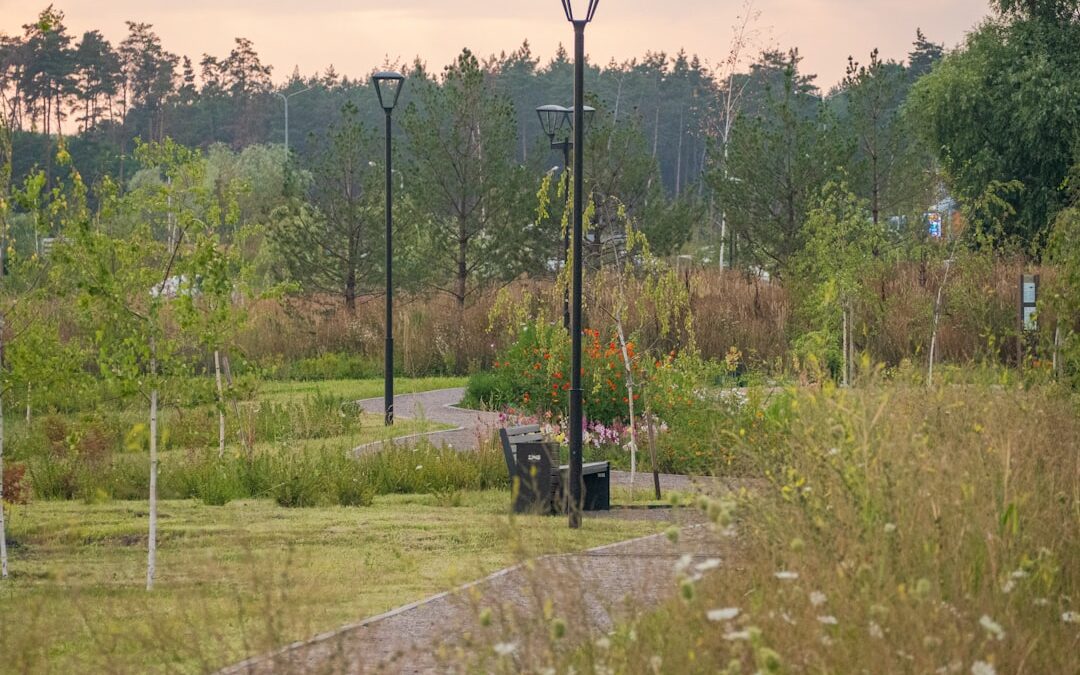
Sutton Park is one of the finest and most important open spaces in Britain – a vast tract of ancient heathland, woodland, wetland, and seven lakes covering 2,400 acres on the northern edge of Birmingham. It is a National Nature Reserve (NNR), a Site of Special Scientific Interest (SSSI), and a Scheduled Ancient Monument, and has been freely accessible to the people of Sutton Coldfield and Birmingham since the reign of Henry VIII. Its history, ecology, and sheer scale make it unique among urban parks in Europe.
History: The Royal Charter of 1528
The origins of Sutton Park as a protected common stretch back to the medieval period, when the land formed part of the manor of Sutton held by the Bishop of Lichfield. In 1528, Henry VIII granted a Royal Charter to the people of Sutton Coldfield at the request of Bishop John Veysey, a local man who had risen to become a bishop and a favourite of the Tudor court. The charter gave the burgesses of Sutton Coldfield the right to use the park “for ever” – for grazing, timber, and recreation. That 500-year-old guarantee remains the legal foundation for free public access to Sutton Park today.
The park has survived largely intact through the centuries largely because it remained common land. Unlike countless other medieval parks, it was never enclosed and converted to agriculture during the great land enclosures of the eighteenth and nineteenth centuries. When Sutton Coldfield was absorbed into Birmingham in 1974, the park’s management passed to Birmingham City Council, which has maintained it as a public open space ever since.
Size and Landscape
At 2,400 acres (970 hectares), Sutton Park is one of the largest urban parks in Europe – significantly bigger than Richmond Park in London (2,360 acres) and vastly larger than London’s Hyde Park (350 acres). The scale means that genuine solitude is possible even on busy weekends: walk a mile from any of the gates and the sounds of the town fade entirely.
The landscape is a mosaic of ancient wet and dry heathland, valley mires (nationally rare bog habitats), open pools, birch and oak woodland, and grassland. The heathland, maintained by grazing and periodic controlled burning, is the habitat type that defines the park’s character and is home to its most significant wildlife.
The Seven Pools
Sutton Park contains seven pools, all created in the medieval period by damming streams to form mill and fish ponds:
- Powell’s Pool – the largest, approximately 30 acres, in the south-west. Best for fishing and birdwatching.
- Keeper’s Pool – a scenic mid-size pool near Banners Gate, popular with families and anglers.
- Wyndley Pool – adjacent to Wyndley Leisure Centre, the most accessible pool for visitors arriving at the main gates.
- Bracebridge Pool – a beautiful lake in the central park with an excellent circular walk and cafe nearby.
- Longmoor Pool – a quieter pool in the south-central section, good for solitary birdwatching.
- Blackroot Pool – the most secluded pool, in the north-east, famous for wild swimming and woodland walks.
- Little Bracebridge Pool – the smallest, connected to Bracebridge Pool and particularly rich in aquatic vegetation.
Wildlife: A National Nature Reserve
Sutton Park’s designation as a National Nature Reserve reflects the genuine ecological importance of its habitats. The park is home to remarkable wildlife for an urban setting.
Deer: A population of fallow deer roams the park’s heathland and woodland. Dawn and dusk are the best times to see them, particularly in the quieter western and northern sections. During the autumn rut (October) the sound of stags carries far across the heathland.
Kingfisher: Present at most of the park’s pools and streams, the kingfisher is one of the most eagerly sought species for visitors. Blackroot Pool’s inlet stream and the Ebrook valley are reliable locations.
Great crested newt: One of the park’s most significant species, the great crested newt – a European Protected Species – breeds in the pools and ditches of the valley mire areas. The park’s wet habitats support one of the largest great crested newt populations in the Midlands.
Rare heathland plants: The open heathland supports ling heather, bell heather, cross-leaved heath, and the nationally scarce marsh gentian, which flowers in late summer in the wetter heathland areas. The valley mires hold rare species including round-leaved sundew, a carnivorous plant.
Birds: Over 140 bird species have been recorded in the park. Notable species include hobby (summer visitor, hunts dragonflies over the pools), woodcock (winters in the woodland), grasshopper warbler (breeds in the heathland scrub), and all three British woodpecker species.
Walking Routes
The Holly Hurst Trail (approximately 3.5 miles circular) loops through the ancient oak and birch woodland of Holly Hurst in the north-east, connecting Blackroot Pool, Wyndley Pool, and the heathland sections. This is the park’s most popular marked walking route and is well signed throughout.
Pool Circuits: Each of the seven pools has a circular walking path. Powell’s Pool (2 miles) and Bracebridge Pool (1.5 miles) are the most popular. The complete round-the-park circuit following the outer boundary is approximately 8-9 miles.
The Roman Road Walk: Icknield Street (Ryknild Street), a Roman road approximately 1,900 years old, runs in a straight line through the park from south to north for approximately 2 miles. Walking this route is one of the most historically atmospheric experiences the park offers.
Cycling
Cycling is permitted on designated bridleway routes within Sutton Park. Cyclists should follow the signed routes and give way to pedestrians and horses. Mountain biking off the designated routes is not permitted. The park’s terrain makes it a pleasant cycling environment, particularly on dry days, with views across open heathland that are quite different from typical urban cycling routes.
Facilities
Wyndley Leisure Centre (Wyndley Lane) is the main leisure facility associated with the park, offering a swimming pool, gym, and sports halls immediately adjacent to the Wyndley Gate entrance.
Cafes: There are cafe kiosks at several locations within the park including Bracebridge Pool and near the main gates. Availability varies seasonally.
Car Parks: Major car parks at Wyndley Gate (Wyndley Lane), Boldmere Gate (Boldmere Road), Town Gate (Park Road), Banners Gate (Banners Gate Road), Streetly Gate (Streetly Lane), Four Oaks Gate (Hartopp Road), and Blackroot Gate (Blackroot Road). All charge a fee. Annual and frequent-visitor permits are available.
Getting There
Sutton Park is well served by public transport. Sutton Coldfield railway station (Cross-City Line from Birmingham New Street) is immediately adjacent to the Town Gate entrance on Park Road. Buses from Birmingham city centre and surrounding areas serve multiple gates. By car, the park is accessed from the A5127, A454, and B4531.