
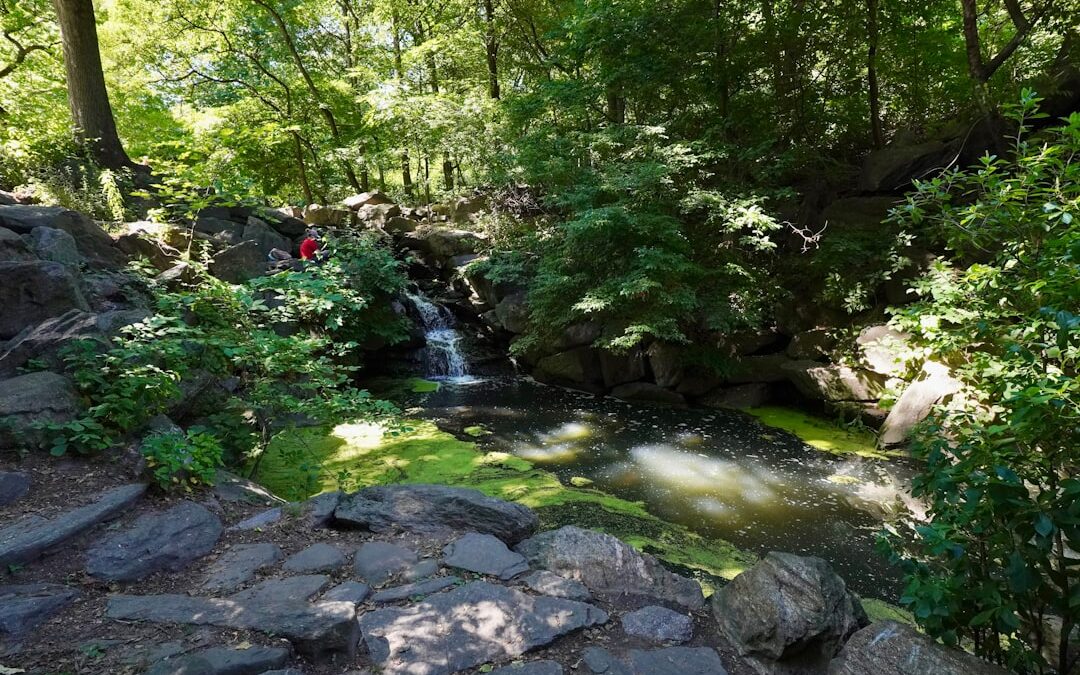
Blackroot Pool is one of the most beautiful and secluded stretches of water within Sutton Park, Birmingham’s vast National Nature Reserve. Tucked away in the park’s north-eastern corner, this peaceful lake has drawn walkers, swimmers, and wildlife enthusiasts for generations – and in December 2022 it caught the attention of The Guardian, which featured it as one of Britain’s finest spots for festive outdoor swimming. Whether you are visiting for a bracing winter dip, a quiet afternoon of birdwatching, or simply a woodland stroll, Blackroot Pool rewards every visitor who makes the journey to find it.
Location within Sutton Park
Blackroot Pool sits in the north-east of Sutton Park, closest to the Blackroot Gate entrance off Blackroot Road, Sutton Coldfield, B74 2YH. It is the most northerly of the park’s seven pools and, at roughly 10 acres, one of the smaller ones – but what it lacks in size it more than makes up for in atmosphere. Dense birch and oak woodland wraps around much of the shoreline, and the landscape here feels wilder and more remote than near the busier Wyndley or Bracebridge pools.
From Blackroot Gate the pool is a straightforward five-minute walk east along the marked path. Visitors arriving at Boldmere Gate can reach it in around 20 minutes by walking north through Holly Hurst, Sutton Park’s ancient woodland section. The pool also forms part of the Holly Hurst Trail, the park’s most popular circular walk.
Wild Swimming at Blackroot Pool
Blackroot Pool is widely regarded as one of the best accessible wild swimming locations in the West Midlands. The water is clear and relatively shallow near the southern bank, making it welcoming for confident open-water swimmers. In summer the pool reaches temperatures of around 18-20 degrees Celsius. In winter it is considerably colder – typically 4-8 degrees – which is precisely why it attracted coverage in The Guardian’s 2022 guide to festive wild swimming.
There are no lifeguards on duty at any time, so swimming is entirely at the swimmer’s own risk. Open-water swimming experience and, ideally, a wetsuit are strongly recommended for winter visits. The park authority (Birmingham City Council) does not officially designate a swimming area, so swimmers should exercise common sense: enter slowly, never swim alone, and be aware of cold water shock. The early morning hours, before dog walkers arrive in numbers, offer the most serene experience.
Birdwatching
The pool and its surrounding reed beds and woodland edge are excellent birdwatching territory throughout the year. Regular species include grey heron (a pair nests in the tall oaks on the western bank), great crested grebe (usually present from February onwards), tufted duck, and mallard. In winter the pool attracts occasional visits from goosander and little grebe. Kingfishers have been recorded along the inlet stream on the northern side, and the surrounding birch woodland holds treecreeper, nuthatch, and all three British woodpecker species.
Autumn mornings are particularly rewarding: the combination of low mist over the water and the russet colours of the surrounding oak and birch canopy makes Blackroot Pool one of the most photogenic corners of Sutton Park.
The Blackroot Pool Woodland Circuit
The most popular walk here is a gentle circuit of approximately 1.2 miles that loops around the pool and through the adjacent birch woodland. The path is mostly firm gravel but can become muddy on the western bank after rain. Walking boots are recommended year-round.
Starting from Blackroot Gate, head east to the southern bank, then turn north along the eastern shore. This stretch passes through open heathland with views across the water towards the wooded western side. At the northern end of the pool a small bridge crosses the inlet stream – a good spot to watch for kingfisher. Continue west along the northern bank (this is the quieter, muddier section) and then south back through the birch wood to complete the loop. The full circuit takes approximately 30-40 minutes at a leisurely pace.
For a longer outing, connect this circuit with the Holly Hurst Trail, which extends through the ancient woodland to the south and can add another 2-3 miles to the walk.
History of Blackroot Pool
Like all seven of Sutton Park’s pools, Blackroot Pool is largely artificial in origin, created in the medieval period by damming a small stream to form a mill pond or fish pond for the Bishop of Lichfield, who held the manor of Sutton. The earliest documentary reference to the pool appears in records from the sixteenth century, though its creation almost certainly predates these. When Henry VIII granted the Royal Charter for Sutton Park in 1528, the pools and their fishing rights were formally secured for the people of Sutton Coldfield.
The pool takes its name from Blackroot, a now-lost settlement or farm that once stood on the edge of the heath. The name likely derives from Old English elements meaning a dark or black root or rootstock, possibly referring to the peaty, heather-covered ground of the surrounding heathland.
Practical Information
Parking: The nearest car park is at Blackroot Gate (off Blackroot Road / Rectory Road, B74). There is also parking at Boldmere Gate (Boldmere Road) for those approaching from the south. Both car parks charge a small fee operated by Birmingham City Council.
Access: The main path around the pool is accessible to pushchairs and wheelchairs on the southern and eastern sections. The northern bank is uneven and not suitable for wheelchairs. Dogs are welcome and must be kept under control near the water and wildlife areas.
Facilities: There are no cafe or toilet facilities at Blackroot Gate itself. The nearest facilities are at Wyndley Leisure Centre (approximately 1.5 miles south). The Three Crowns pub on Birmingham Road is a popular post-walk option.
Getting There by Public Transport: Take the West Midlands Metro to Sutton Coldfield town centre, then bus 110 towards Four Oaks, alighting near Blackroot Road. Alternatively, the pool is a pleasant 25-minute walk from Sutton Coldfield railway station via the park.
Seasonal Tips
Spring (March-May): Great crested grebes begin courtship display. Early morning visits reward with birdsong and wildflower displays on the heathland path.
Summer (June-August): Peak wild swimming season. The pool can get busy on hot weekends; arrive before 9am for a quieter experience.
Autumn (September-November): Outstanding photography opportunities. Fungi appear along the woodland path from September.
Winter (December-February): Best for the wild swimming experience as featured by The Guardian. Frosty mornings turn the pool and surrounding woodland into a magical landscape. Waterproof and warm layers are essential.